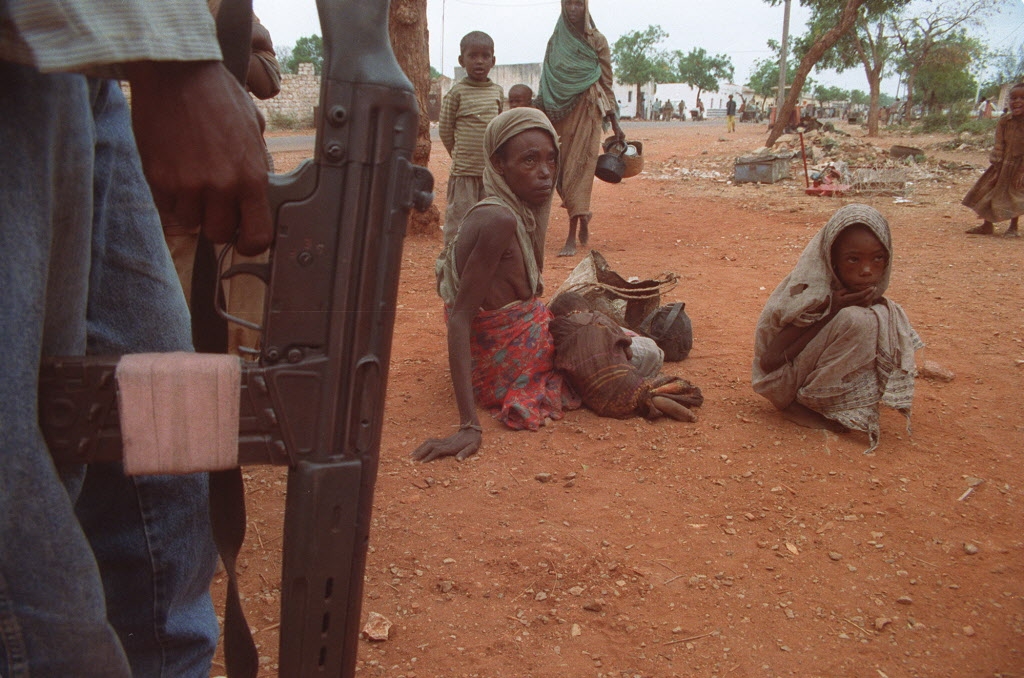
This post was written before the tragic death this week of Marah Williams (Penny LeGate’s 19 year-old daughter). At a celebration of Marah’s life Saturday afternoon, Penny remembered Marah as a “shooting star”. Penny’s words were eloquent and remarkable. Our heartfelt thoughts and prayers go out to Penny, Mike and Marah’s sister, Molly. A memorial scholarship will soon be set up in Marah Williams’ name. More details to come.

I remember the warm smile that spread across Penny’s face when she talked about how special it was that Marah could share in her recent trip to Ethiopia. At that moment it wasn’t a repurposed journalist advocating for the poor as much as it was a grateful mom just sharing her heart. Penny LeGate has a 1000 watt smile. I suspect a lot of that power she shared with Marah.

So here is that post. Read it again. Think of our good friend, Penny and how she must be hurting. Now consider how you can come alongside her when she may need you the most…

Penny LeGate gets excited just thinking about the moment when the bandages come off.

The Seattle TV journalist is leaving today for a month-long trip to Ethiopia, following Pasco, Washington ophthalmologist Dr. Jim Guzek and his effort to restore sight to cataracts patients living in extreme poverty. LeGate says Dr Guzek will be the only surgeon on-site with a small support staff in the remote area of Dembi Dolo in western Ethiopia near the Sudan border. LeGate will also be visiting Ethiopia’s Omo River Valley.

The 57-year old re-purposed journalist will be in Africa for a month gathering video of people whose lives she says are “pretty much unchanged for generations.” This is Dr. Guzek’s fourth trip to Ethiopia, http://www.tri-cityherald.com/2010/11/29/1270702/rotarian-doctor-back-from-ethiopia.html the land with more blindness per capita than any nation on earth. LeGate hopes to air the video soon after her return to Seattle.

“I can’t wait for that moment when these people are finally able to see for the first time in years. It’s a dramatic moment.” LeGate’s especially excited for this trip because she’ll be bringing along her (then) 18 year-old daughter, Marah. “It’s so cool Marah will get to see all this.” She says, “Imagine watching that moment when someone’s giving the gift of sight. I can’t wait.”
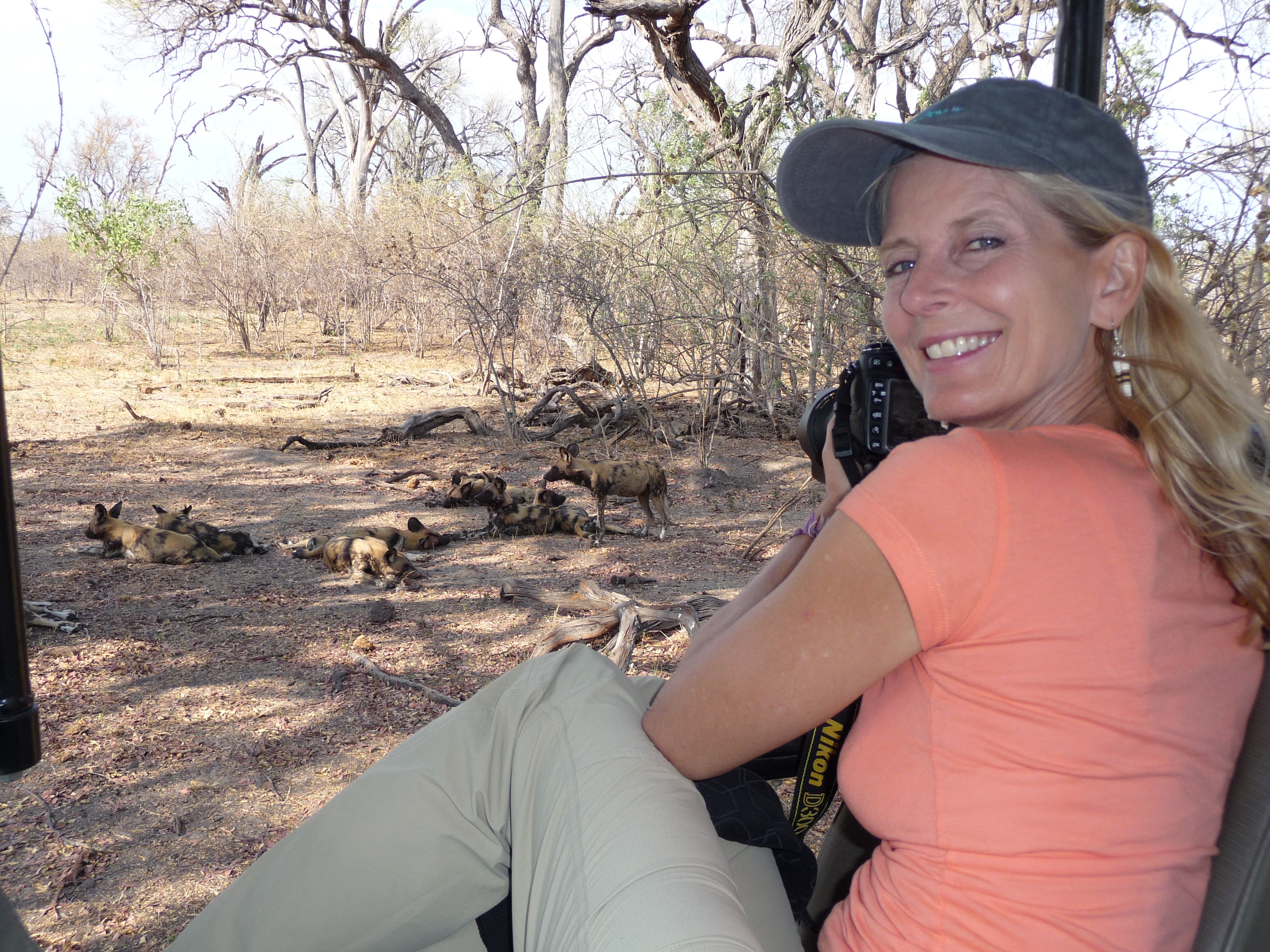
The people getting the surgery will finally have a measure of independence. But LeGate says just as important is the liberation that the blind’s caregivers receive after the surgery.

She says the Omo River Valley is, “right out of National Geographic.” LeGate, who’s worked at Seattle Channel since she left KIRO 7 TV in 2010, says, “You’ll recognize this tribe, the Mursi, by the plates they wear in their lips.” Tri Cities Rotary is paying her way.

Dr Guzek’s cataracts work is supported by the Tropical Health Alliance Foundation an organization founded by Dr. Larry Thomas from California.

http://www.thaf.org/WWW.THAF.ORG/HOME_PAGE.html

On April 16th, a 22-minute documentary LeGate produced entitled, “Women to Women” will air on The Seattle Channel’s “Community Stories”. LeGate’s work can often be seen on the Seattle Channel.

http://www.seattlechannel.org/videos/video.asp?ID=3071205.

Penny traveled to Uganda for that project. The doc follows a group of women, some from Seattle, who travel to Africa to share their skills with women there. LeGate says the project was especially difficult because it was just her video and no narration. “It’s a little scary.”

Posted: March 9, 2012 in journalism

If you are a fan of one-time NPR journalist Alex Chadwick and you haven’t had a chance to read Mike Janssen’s recent profile (Chadwick: Recharged to cover energetic beat) in Current, please take a few minutes and read this. Thank you, Mike.

http://www.current.org/people/peop1204chadwick.html

Current is available in print and online. It is an editorially independent service from the American University School of Communication in Washington, D.C.

Survey: The Crime News Study

Posted: March 7, 2012 in employment

Friends,

Please take 3 minutes to fill out this simple survey on advertising and local crime news. It’s part of a study we’re conducting for this University of Washington class:

COM 529: Foundations: Research Strategy & Business Practice (Evans)

https://catalyst.uw.edu/webq/survey/nettv/156865?solstice_selected_button=btn_1ec6f38737ba8c2a1019552648b87517_1&sol_button_data_btn_1ec6f38737ba8c2a1019552648b87517_1=a6e0cdd3aad112f985c5ac6b9923ab92349201010b42a77e09b1b5ea2f714c4334166cfcae4e1c8d23f822ed8f11ff3c303de6c80ba8f2d94b31352f91da3d19ec41390e2a8f1570711412ce8d85aa45ca11240f665fa04a876e7f1e63854b2d9e5e4b680f67f98bef4d9a8e5fca13acbb51570df489846eebba727ab7b9c70802c647b64d3b21e5e10943927e8f9a87

I’m hoping to use this blog to publish the results.

Thanks, John Yeager

TWO-DAY TRAINING SESSION 

Trying to keep up with the latest developments in campaign financing? Join the Sunlight Foundation in Washington, D.C., for a two-day training session for journalists. The training will take place April 21-22, 2012.http://sunlightfoundation.com/training/sri/?utm_source=facebook&utm_medium=ads-021312&utm_campaign=SRI

INTERESTED IN A FELLOWSHIP?

And a new 2012 fellowship was posted today. Looking for purpose? http://sunlightfoundation.com/jobs/155/

Journalism / Broadcasting / Communications Students:  Take advantage of this

http://www.spjwash.org/2012/02/hey-journalism-students-apply-for-these-spj-scholarships/

John Schenk’s Tips for Finding Purpose after the Newsroom

1.   Improvise

2.   Work for a humanitarian organization.

3.   Be careful what you pray for.

John Schenk is a film buff. He specializes in old B-westerns. Many of the stories he’s covered since he left the newsroom were right out of the lawless Wild West, where the quick and dead always got the headlines. It would be the voiceless innocent caught in between who would need a journalist and witness.

Schenk remembers it vividly. It was Fall 1990. He was frustrated by lack of access to rumored pockets of starvation in southern Sudan. A friend offered to listen to him vent but after a while she suggested they pray about the problem.

Schenk said he began slowly but soon the words came “in torrents”. Suddenly he was saying: “Lord, you gave me the skills. Get me into the places of greatest need and get me out and I’ll tell the stories of your suffering people.”

Be careful what you pray for.

Soon he was en route to Romania where the fall of the dictator Ceausescu had unveiled horrid “orphanages” where “effective” children had been warehoused.  “I saw suffering like I’d never witnessed before. It was like my crash course for what was to come.”

Soon Schenk was in Beirut, an “apocalyptic” landscape after 16 years of civil war. Then the prayer inspired by southern Sudan was answered. He and a colleague “smuggled” 50 tons of food up the Nile to a remote region long-suffering under civil war and a killer disease called black fever (Leishmaniasis).”

January 1992 brought Mogadishu. Eighteen months before the “Black Hawk Down” incident that incensed Americans. Mogadishu was a lawless, crumbling city where men (and boys) with guns, chewed drugs and stole food from the unarmed masses. Schenk and his boss were drawn back many times over eight months by the suffering.

Schenk started out on a city daily in Pasadena, California in 1972 and finally walked away from deadline pressures and the intense daily grind of a police and crime reporter in 1981. He evolved from a “pretty much squeaky clean sort of guy into something of a gonzo journo” fueling his trade with “lots of alcohol and drugs.”

Schenk developed an expertise in outlaw motorcycle gangs and “their migration into organized crime in the 1970s.” He co-authored an investigative piece called Born to Raise Hell Inc. for MacLean’s Canada’s weekly news magazine in 1977.

“By 1981 I was looking to get off the adrenalin treadmill,” Schenk said.

Schenk left the Toronto Sun that year, burned out and looking for “something more meaningful,” he recalls. Maybe he’d hitch hike around the world. “I thought I was going to have to walk away from journalism completely.” Instead, he re-purposed his journalism skills. “Turns out it was as much my lifestyle as much as my trade.”

Then he heard World Vision Canada was looking for a freelancer to go to Ethiopia. It was 1985 and that country was in the grip of The Great Famine.

Schenk worked with World Vision for nine years all over Africa producing stories and still photos of World Vision development work and responding to fast-breaking natural disasters and armed conflicts in Angola, Rwanda, Somalia and southern Sudan, taking assignments in Lebanon and Romania. He videotaped gruesome images of the Rwandan genocide up close.

So, how to re-purpose one’s life?  John Schenk says, “Don’t presume media or public relations are the only tracks. Don’t underestimate the value brought to any organization by someone used to marching off the map,” he says. John especially recommends looking at humanitarian organizations.

“A hard core journalist is an improviser, sees problems, challenges. They cut through systems and protocols and find solutions. And lives get saved.”

“It’s a place where a journalist can be a pioneer.”

He recalls 2005 in the mountains of Pakistan when World Vision responded to a 7.6 magnitude quake that killed 76,000. A colleague, another former journo turned to him and said: “These mountains, we’ve got to get up there and see what’s going on.”

Schenk had been thinking the same. He replied: “Yup, but we can’t go empty-handed.” John writes, “A few days later we were marching up steep slopes with men from a devastated village, carrying 900 blankets on their backs.

We returned to camp and spent half the night writing our stories, sending our photos to World Vision HQ by satellite modem and describing our day in interviews to major media outlets from nearly every time zone on the planet.”

John Schenk has indeed been brought through some of the most dangerous places on earth. God has held up his end of the “bargain”.

And telling the stories he found there is where John Schenk has found his purpose and an answer to a prayer.

—————————————————————————————————

Editor’s note: John Schenk works with World Vision Global Communications. He will be in Tacoma, Washington Wednesday night, February 22nd as part of a panel to discuss the Pacific Lutheran University Media Lab’s documentary “Over Exposed: The Cost of Compassion”.  Schenk is among those featured in the award-winning documentary. The film will be shown at 7pm at Lagerquist Hall in the Mary Baker Russel Building on the PLU campus. Admission is free.

John Schenk helped edit portions of this copy. Some habits die hard.

———————————————–  ———————————– ————

Penny LeGate’s Tips for becoming a Re-purposed Journalist:

  1. Find something you’re really passionate about.
  2. Be willing to work really hard – for free.
  3. Find a way to insert yourself into a group of like-minded people.

Seattle’s Penny LeGate just had to ask, “Where are you guys from?”‘

The TV journalist had just noticed a group of doctors wearing scrubs in the lobby of an Addis Ababa hotel. LeGate was curious.

She was on a trip to Ethiopia covering polio eradication efforts there.

“Seattle,” was the response. The doctors were traveling in Ethiopia, working at a government-run hospital, serving the poor. Addis Ababa in east Africa and Seattle, Washington are 8,365 miles apart but all of a sudden LeGate had a “local” story.

Small world.

But not so small for a re-purposed journalist like Penny LeGate. “If you know a good story, you stumble upon it. And then you grab it.” The piece about those Seattle doctors will soon air on Seattle Channel’s City Stream program.  http://take21.seattlechannel.org/

LeGate, asked that group of doctors because she’s inquisitive. Her DNA has “news” written all over it. She started in broadcast news as a summer intern at Nebraska TV in 1976 in Kearney, Nebraska. She was born and raised in the Cornhusker state.

LeGate has anchored in Seattle, Pittsburgh, Wichita and Omaha. Many in Seattle still know her as the co-host with Brian Tracey on KING 5’s Evening Magazine from 1986 to 1995.

She anchored at KIRO 7 TV from 1997 til 2010. She remembers the sadness at leaving KIRO. LeGate’s contract wasn’t renewed. She describes KIRO as a collegial environment but she grew tired of the TV news business. And she says, “I got tired of being told I wasn’t good enough.” KIRO 7 TV has declined comment for this post.

What’s her purpose now? “I’m a pipeline from a story to the people who don’t have any awareness of my issue. She speaks all over the world. LeGate says her biggest moment was serving as keynote speaker when Bill Gates addressed a Rotary International convention in New Orleans in May.  20,000 were there.

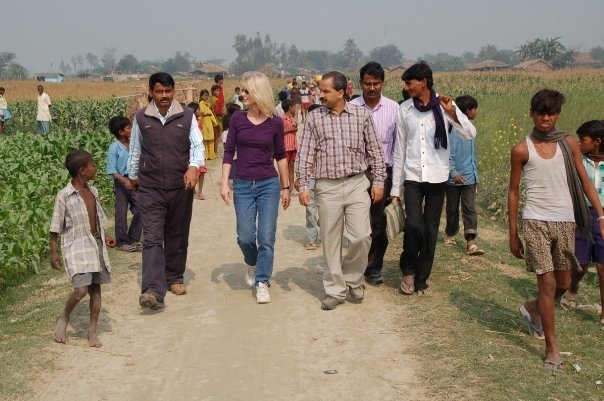
The Rotary’s main mission is to conquer polio. She says her job is to inspire them. “I tell them their story.” I tell ’em what it’s like to be on the front lines in the war on polio. “It’s a war that thanks to Rotary, is almost over.”  She traveled recently to remote Bihar, India to chronicle the fight against polio.

“The farther out I go, the happier I am.” I love watching these people fighting the disease, the people walking to deliver the vaccine.”

LeGate says there were no cases of polio in India last year. She smiles, “That’s amazing.”

LeGate believes strongly in the issue of social justice when it comes to health. She says it’s different having polio in a nation like India. “Kids in the U.S. have had access to polio vaccine for decades. Kids in India haven’t. Being handicapped in India is a helluva lot different. These people end up as beggars.”

http://www.cartercenter.org/donate/partners/archives/lions_pfizer.html

In March, LeGate will be taking her tenth trip to Ethiopia. She’ll be videotaping Dr. Jim Guzek, a Tri-Cities ophthalmologist and other doctors’ efforts to restore sight to the rural poor through cataracts surgery. Ethiopia has the highest rate of blindness per capita of any country in the world.

This re-purposed journalist is finally following her own heart. “Everybody thinks I’m really nice but I’m a feisty bitch.” She just turned 57. “I wouldn’t exchange the gray hair or the lines on my face for a 25-year old brain.” Her work has taken her to Ghana, Ethiopia, Uganda, Tanzania, Kenya, Nepal, India and Nicaragua.

“Never in my wildest dreams did I think I’d see this much of the world.”

You can see LeGate’s new documentary called “Timeless Discoveries”, about 150 years of achievement in the College of Arts and Sciences. It airs on UWTV. http://www.artsci.washington.edu/150/sciencedoc.asp

Are you in an “information silo”? Do you report that way? Do you know many reporters who do? This doesn’t need to be a rant on the “liberal” media. That’s too easy. Oooops, maybe I just tipped my hand. But here’s an honest question: Where do you get your news? Do you only seek that with which you agree?

Fascinating read in the WaPo, picked up locally by the Seattle Times.

http://seattletimes.nwsource.com/html/nationworld/2017294009_mediadivide21.html

Recent article in the New York Times:

“ABC’s new push to humanize the news and CBS’s heavily promoted emphasis on hard news may make NBC News the Goldilocks news division — not too hot, not too cold, just right”.

http://www.nytimes.com/2012/01/09/business/media/at-abc-cbs-and-nbc-news-accentuating-the-differences.html?_r=1&pagewanted=all%3Fsrc%3Dtp&smid=fb-share

But is humanizing the news really a “new push” for any good journalist? Isn’t that an effort any good journalist brings to his/her work every day? It is for the ABC News reporters I know like former KIRO-TV (CBS Seattle) colleague David Kerley.

http://abcnews.go.com/author/david_kerley

There’s nothing new about Kerley’s solid and original work. He’s always taking a new perspective on conventional wisdom. Take for instance one of his latest reports comparing Ronald Reagan’s re-election prospects with Barrack Obama’s. A tough stretch? Kerley makes a good case.

http://abcnews.go.com/WNT/video/obama-president-campaign-trail-reagan-politics-us-15318251

Kerley is easily one of the best reporters in the nation today, always seeking to bring a human face to the news, always looking for a new angle. TV network reporters like Kerley bring a level of hard work, tenacity and creativity under pressure that would wither most of us.

Five mornings a week for the last seven years, while you were sleeping – Lily Jang has gotten up to go to work. Her alarm clock is set for 3:45 am. “I never hit the snooze button,” says Jang. “I get paid to be myself.” Lily Jang has worked in Seattle TV news for 11 years, for the last seven as the lead morning anchor for the Q13 Morning News

http://www.q13fox.com/news/mornings/
Still, in six weeks all that will change. Because Lily Jang is leaving Seattle to go back home to Texas. Her new purpose? Connecting with family and starting a new job as morning anchor for KHOU-TV (CBS) in Houston. She was born in Vietnam. Her parents, Vivian and David Jang are Chinese. She is fluent in Cantonese and Vietnamese. Jang says her main purpose is to be with her father who’s suffering from Parkinson’s Disease.
“Everything I ever did was because of my parents,” Jang says.

Right now she just wants to tell stories, mainly those she considers “American Dream” profiles. Her inspiration comes from her mother and father. Vivian Jang got out of Vietnam with Lily and her brother in the spring of 1975 when Saigon fell to Communist forces. Because of bureaucratic red tape her dad had to wait three years to get out of the country.

Her mom worked as a secretary. “All they ever did was support me.” Eventually the couple opened a Chinese restaurant and grew the business. “Everything they ever did was because of me and my brother.
But today, with her father suffering from Parkinson’s disease, Jang feels it’s time to go home. “If not now – when?” she asks. On a recent trip back to Texas Lily noticed her dad’s shaking (a tell-tale sign of Parkinson’s) had gotten noticeably worse. But Lily says being at her father’s side seems to break the side effects of Parkinson’s – for now. Jang says being back home will make her father happy. Her parents still live in the Houston house in which Lily grew up.
Jang graduated from the University of Texas http://www.utexas.edu/ with a degree in broadcast journalism. One person who always believed in her was her mentor, James Lynch, Q13 News reporter. Lynch was an anchor in Austin, Texas when Jang was just getting into the business. As a young reporter she bugged him for advice. Lynch used to implore Lily to “give it your 150 (percent).” He was among those giving the young journalist encouragement but Jang’s always had enough confidence. “I got into the business with the attitude that I could do better than that girl.”

“And being nosey helps.”

Lily Jang is a journalist who embraces social media with both arms. She has 19,000 Twitter followers and 6,200 Facebook friends. When she first mentioned her plan to leave Seattle TV news a few weeks ago, she got 580 comments on her Facebook page http://www.facebook.com/iamlilyjang?ref=ts . She read every one. They were overwhelmingly supportive. But as much as she uses social media, Lily describes herself as a private person. And she marvels at the idea that what she’s doing is some grand gesture. “I don’t think it’s such a big deal. I’m not obliged to do this, it’s an honor. My parents did everything so my brother and I could live the American Dream.”

“And when you make a decision from the heart you never regret it.”

Lily Jang’s last day anchoring the Q13 Morning News is Friday, February 10th, 2012. That’ll be her last day of “sleeping in”. Three days later she begins her new morning job at KHOU-TV.  Then she’ll be setting her alarm for 2:30am.

http://www.q13fox.com/about/station/newsteam/jang/

Posted: January 9, 2012 in journalism