Archive for the ‘journalism’ Category

What’s your story all about?
 
 
John Larson’s Top Three Things You Can Do to Find Purpose in Your Work

1. Find a way to care – everyday. I find meaning in detail, the last
words of a father, the note posted in an abandoned factory. If a story
doesn’t move you, it won’t move anyone.

2. Don’t confuse objectivity with distance, or a lack of passion. Open
yourself to those you cover. Listen closely, feel, imagine, empathize.

3. Don’t mistake “balance” with adding up lies and dividing by two.
Find truths. Get them right.

John Larson says when a journalist tells a story worth telling it builds community.  John Larson has been among the nation’s best at story telling for the better part of four decades.

Several years ago, when I was a young local TV news feature reporter and John Larson had just been hired by NBC News, I’d describe a story idea to him and he’d ask me one simple question: “What’s the story all about?” If I could boil the answer down to 10 seconds, then he knew I had a firm understanding of how I would approach the piece. I was on my way to telling a story “worth telling.”

For Larson, this approach takes “heavy lifting.”  He says, “You negotiate your way to find the richest deepest vein.” Larson says, “When you give blood, the lab technician comes in to ‘stick’ you. If they’re not good, they jab and it hurts. But if they’re good, they find the vein and you don’t even feel it.” He says, “The same is true with a storyteller.”

He’s passionate about his craft.

Larson has won dozens of national, regional and local awards for broadcast excellence including 4 Columbia DuPont Awards, 2 national Emmys, 2 Peabodys, 2 IRE Gold Medals. He’s lost count of the Regional Emmys.

His TV career began at KTUU in Anchorage. After 7 years, it was on to KOMO 4 News in Seattle. He worked there 8 years. In 1994, he and his family moved to Southern California where he joined NBC Dateline. In 2008, after 14 years he and NBC couldn’t agree on a contract so he left and started his own freelance company.  

Now Larson finds purpose at PBS contributing pieces for “Need to Know”. One airs Friday called “Crossing The Line”. Below is a link to a preview. http://www.pbs.org/wnet/need-to-know/security/video-first-look-crossing- The story focuses on the US Border Patrol and the killing of undocumented workers. But Larson says, “What it’s really all about is giving voice to the voiceless, those immigrants who are shot crossing the US-Mexico border, killed by US Border Patrol.” People Larson says, “with no legal or political standing.”

He lectures and conducts teaching seminars for TV journalists (thru E.W. Scripps Howard) all over the world. He also does freelance work for non-profits like World Vision http://www.youtube.com/watch?feature=player_embedded&v=IHXHNQJmWNE . I accompanied Larson (working for NBC at the time) when he went to Africa in 2007, reporting on relief work done by World Vision, Hoops of Hope, Kiva.org and World Bicycle Relief for NBC News. http://www.msnbc.msn.com/id/16110914/ns/nightly_news-making_a_difference/t/hoops-hope-african-orphans/

Larson says, “I began micro lending 5 years ago as an anti-depressant. I was a journalist in Los Angeles, mostly covering the latest self-inflicted wounds of Hollywood celebrities like Paris Hilton, Lindsay Lohan and Mel Gibson. I began loaning money through Kiva in an effort to stay sane. In 2010, when Vision Fund (World Vision) asked for a proposal to tell its story, I jumped at the opportunity.
http://www.newslab.org/2011/11/23/once-a-storyteller-always-a-storyteller/

Whether he’s working for NBC or PBS or as a freelancer for World Vision, there’s always a purpose behind John Larson’s work. He’s trying to find that vein. To come back with a simple answer to that simple question:

What’s your story all about?


The Mechanics of Storytelling

Posted: April 17, 2012 in journalism

Every visual storyteller needs to know the mechanics of the craft. That’s never been more true than today – in the age of You Tube. But what do you say when you turn on the camera?

Discussion in new media guru Drew Keller’s MCDM (University of Washington) COM 583 class Monday night, centered on how we consume You Tube “stories” and how that consumption defines us more than what we watch. Amateur producers (that’s you and me) affect the way we consume it. Studies show that we can watch You Tube for hours because the content is seemingly endless.

In Monday’s class we examined how You Tube has become so prevalent in today’s culture that it’s becoming a social network in and of itself.  We gravitate toward those who watch the content we watch ourselves. We examined the video diary phenomenon and how deep that well appears to be as well.

As an award-winning TV news veteran, it’s difficult at times for me to assimilate into this new home-made video culture. I hate to admit it but I had become a TV snob. I come from an industry where I was among the select few who were given the keys to the broadcast machine. You had to work hard to get those keys. I always felt like you had to earn them. Not anymore. Today all you need is a You Tube account, an i-phone and something to say.

All too often it’s that third component that’s missing in You Tube content. It’s my hope that when I post something on You Tube I will at least have something to say.

Shouldn’t we all expect at least that much?

Channels of Hope: Austin to Africa

It’s the trip of a lifetime. An international charity approaches your local TV news station with a proposition: Provide us with an eager journalist willing to tell stories that’ll literally save lives and we will cover the costs of your trip to Africa.

“Going to Africa? That’s not what local news usually does.”

KVUE TV’s Tyler Sieswerda is emphatic over coffee at a downtown Austin, Texas Starbucks. “There’s a bigger purpose.”

 The 43 year-old anchor/reporter is referring to the trip he took in January to Swaziland with international Christian charity World Vision. The KVUE-TV series entitled, “Channels of Hope: Austin to Africa” airing this Thursday and Friday at 6pm chronicles the ongoing struggle to get clean water for those living in extreme poverty.

On Saturday, April 21st, Sieswerda will host a special also entitled, “Channels of Hope: Austin to Africa.” http://www.kvue.com/

KVUE did not promise World Vision anything in exchange for passage to Swaziland. The station agreed to come and see what was going on and consider doing stories.

The series and special (shot by KVUE photogragher Robert McMurrey) also follow the  life-changing trip taken by Austin pastors witnessing the work World Vision is doing in Swaziland to help save lives. Providing clean water is one step. The sub-Saharan African nation has one of highest per capita rates of AIDS in the world.

What did Sieswerda take away from the trip? He won’t worry or stress about his day-to-day issues because he says, “there are many people in Swaziland who aren’t sure if they can find a single meal to feed their children today.” Or, he says if they’ll be able to give them a simple thing like water that won’t make them sick. “There’s a lot more to life than what we’re doing every day at work,” says Sieswerda.

Sieswerda struggled to find his purpose earlier in life. He credits his TV career to his mother who suggested he pursue journalism when he was selling insurance. Tyler took a couple of community college classes and that was it. He was hooked.

Journalists he looks up to are Anderson Cooper at CNN, David Mur at ABC News and NBC’s Brian Williams. After a 17-year career with stops in Grand Junction, Colorado, El Paso, Texas, Phoenix and Atlanta, Sieswerda was ready when the opportunity to travel to Africa presented itself late last year. World Vision was looking for a station to partner with on the Austin Campaign for Children http://austincampaignforchildren.org/ Siesewerda jumped at the chance to go. He says, “Taking that step toward re-purposing was easy.”

Sounds easy. Sounds like the trip of a lifetime, right? Sounds like anyone would jump at a free trip to Africa if given the chance. 

Wrong.

Of the 12 reporters and anchors on the KVUE TV staff only three said yes. “I just don’t understand it,” says Sieswerda. “Anytime you go – you change, it broadens your perspective … it gives you a better understanding of the planet.”

And maybe a little deeper sense of purpose.

Seattle to Uganda: A Journey of Hope and Health

The Seattle Channel invites you to a public screening of a new documentary “Seattle to Uganda: A Journey of Hope” which follows local women on an inspiring trip to a small village in Northern Uganda. It’ll be shown Sunday, April 15th at 4pm.

In the fall of 2010, Seattle resident Maureen Brotherton invited 10 women—most of them unknown to each other – to join her on a journey to visit the women in Aminocira, Uganda. Seattle documentary filmmaker Penny LeGate followed along as women from opposite sides of the globe “forged a partnership that continues to inspire awareness, social change, health opportunities and hope for a better future.”

The free, public screening of the half-hour documentary will take place at Seattle University’s Wyckoff Auditorium, Bannan Engineering Building, 901 12th Ave. Brotherton,

LeGate and several of the women will reunite for the preview and a post-screening talk.

The Community Stories series is about the inspirational people, the relevant issues and the cultural traditions and rich histories that make up our many communities. These short television profiles highlight our residents through stories consisting of personal interviews, slice-of-life episodes and insightful portraits. The series has won several local Emmy awards.

To attend, RSVP to Lori Patrick at lori.patrick@seattle.gov or (206) 733-9764.

Lee Schneider is headed back to Haiti.

And now Schneider, a documentary producer, is officially launching a campaign on Kickstarter.com to raise money for the return trip where he plans to continue shooting for an upcoming documentary focusing on architects and how good design helps the homeless and victims of disasters (like those recovering from the January, 2010 earthquake) in Haiti.

Here’s the link: http://www.kickstarter.com/projects/docuguy/shelter-return-to-haiti?ref=live

His production team is also researching stories in Detroit with the hope of filming there as well, after Haiti production is complete. This Re-purposed journalist is hoping to reach three target audiences: architects, community activists…

And you.

Lee is a former producer for the ABC News (Good Morning America) and NBC News (Today Show, Dateline) and National Geographic among others. Schneider has always been a passionate journalist who sought to observe and report, to comfort the afflicted and afflict the comfortable and remain objective. But as a re-purposed journalist, Lee Schneider now wants his work to help move the ball down the field. In this case – he wants this documentary to actually help get something built.

When he arrives in Haiti, Schneider will focus on stories and profiles he has researched for the past year. When he moves on to production in Detroit, he says he’ll be looking for projects akin to those underway at The Alley Project (TAP) https://www.facebook.com/tapgallery, a collaborative community “design for good” project where architects and community activists donate their time to design and build neighborhood projects.

“When I worked at NBC I was working for GE. That’s what I stood for. When you work for Nat Geo, (owned by Fox) you stand for Rupert Murdoch.” Schneider, a veteran of NBC Dateline, Fox and ABC’s “Good Morning America” is now directing Shelter http://docucinema.com/shelter/,  His documentaries have aired on History Channel, Discovery Health Channel, The Learning Channel, Bravo, Food Network, Court TV, ReelzChannel and A&E http://www.linkedin.com/in/leejschneider.

Schneider also writes a blog for Huffington Post and does online strategies for businesses with a socially responsible mission. His production company http://www.docucinema.com/about/ creates “cause-driven” nonfiction films.

He’s been blogging since 2009. He started by writing a blog called, “500 Words on Thursday”. He averages 2-3 blogs a week. He blogs about once a month for the Huffington Post http://www.huffingtonpost.com/lee-schneider/participatory-design-in-d_b_1340633.html.

Sure, Lee Schneider admits it’d be nice if a show like NBC Today Show ended up doing a story about community renovation in Haiti as a result of the awareness he’s helping create, but he says, “The goal is to build something.”

Schneider’s hoping the Shelter doc will air next year.

Do You – You Tube?

Posted: April 1, 2012 in journalism

As this re-purposed journalist navigates his way up the steep, short hike of life, he’s wondering if you share his fascination and distaste for You Tube. Am I alone?

Do you You Tube? More than two billion of us watch You Tube every day.

YouTube streams 4 billion online videos each day, more than one for every other person on Earth and a 25% jump over eight months ago.

http://mashable.com/2010/05/17/youtube-2-billion-views/

In “Watching You Tube: Extraordinary Videos by Ordinary People”, author Michael Strangelove examines the You Tube phenomenon. New media guru and MCDM instructor Drew Keller has assigned it as this week’s reading in his COM 583 Storytelling class on the University of Washington campus.

Keller’s questions:

What do you think happens to the social order if tastes are no longer closely controlled by institutionalized influences? or How would you describe the complex relations between producers and consumers?

The answer to the first question is simple – You Tube, the natural by-product of a relaxation of the institutional influences of broadcasting. As newsrooms across the nation continue to cut back in hours of programming, You Tube claims that twenty hours of video are uploaded to its servers every minute.

Twenty hours – one minute.

That’s roughly as long as it’s taken you to read from the top of this post to this point.  Twenty hours of video. What’s popular? Charlie Bit My Finger http://www.youtube.com/watch?v=_OBlgSz8sSM (with more than 438 million views).

This may sound old school but in the age of You Tube, high quality storytelling (visual journalism) in this country seems to be eroding. I use this blog to celebrate those who keep its purpose alive. You can also find their work on http://www.facebook.com/groups/TVNewsStroytellers/ This is where you can see broadcast television storytellers like John Larson, Boyd Huppert, Wayne Freidman and John Sharify (to name jut a few) share their excellent craftsmanship with peers. This Facebook page is where journalists seek the recognition and approval of peers they respect. These are the best of the best.

It’s a page where you’ll never see “Charlie Bit My Finger.”

But Strangelove says, “We are moving into a post television era”, adding that You Tube “demands our attention, fragments audiences, worries advertisers, troubles TV execs and erodes monopolization by media corporations.” His insights into the You Tube phenomenon move the ball down the field.

You Tube levels that playing field.

It breaks down the barriers between producers and consumers. It gives anyone with a mobile phone a chance to post a video or picture. But capturing a lucky moment with two boys in a chair is one thing – crafting a story with purpose and style and direction under deadline is something else.

God bless England’s Howard Davies-Carr, the father of the boys, for being there to capture a special, honest moment with two boys on a chair sharing a moment but he’s not a journalist. He’s not a storyteller.  For that you need to spend years honing your craft and refining your talent, seeking feedback from those you respect.

For that you need a purpose. It’s the crafting of a story.

So for me, we’ll always need places where the barriers between producers and consumers exist. Strangelove quotes French sociologist and author Henri Lefebvre,  “The everyday is what’s left over after all distinct, superior, structured activities have been singled out.” http://www.youtube.com/watch?v=CiHfntd7jIs. You can find Lefebvre on You Tube.  The video is 9:27 long. It’s in black and white and all in French. It still has more than 15,ooo views.

Bottom line – it is the role of the storyteller to distill the “everyday” and make it memorable. Life still needs some translation. We can all see a sunset. But not everyone can find the words or the pictures to capture it and bring it back home.

Incidentally, I took that photo with my i-phone. I’m thinking of posting it to You Tube 😉

KING 5’s Margaret Larson is home again.

Larson has just returned from Africa and says, she’s “very excited about the progress of our on-the-ground partners.” Larson tells me what she saw over in Africa was “very moving and enlightening” as she learned more from families there about what cancer is like in their world, especially for children.

The New Day Northwest host has a simple question, “How much would you spend to save one African child’s life?” Larson has found the simple answer – around $450.

Samuel, a boy in the Burkitt’s ward at a hospital in Kisumu, Kenya 2009.

Larson says cancer kills more people worldwide than AIDS, tuberculosis and malaria combined, adding that it’s not just an African problem. “It’s a global issue”, she says. But Africa is where her new non-profit volunteer work for Burkitt’s Lymphoma Fund for Africa (BLFA)

Margaret Larson with Burkitt’s patient, Rosemary and her aunt – March, 2012 – Kisumu, Kenya

http://blfundafrica.org/ is taking place. It’s also where a journalist like Larson, 54, has found a new purpose. http://www.guardian.co.uk/global-development/poverty-matters/2011/feb/04/cancer-africa-health-burden.

“The problem”, says Dr. Corey Casper, of Seattle’s Fred Hutchinson Cancer Research Center, (referring to Africa) is that cancer is still perceived as too expensive to treat. Some childhood cancers, such as Burkitt’s lymphoma, cost as little as around $500 to cure, with success rates of 95%. It costs $300 per month for life to keep someone on ARVs (the drugs used for HIV), so a one-off, $500 to treat a child seems like money well-spent.” Larson says the international community also dictates the agenda to a certain extent. Uganda receives $200 million annually from the United States for HIV treatment, but less than a $1 million for cancer. The Hutch is an active partner with BLFA.

Margaret Larson has hosted New Day Northwest on KING 5, since March, 2010. Seattle is the nation’s 13th-largest media market.

From 1992 to 1993, Larson hosted NBC’s Today Show and worked as a correspondent for NBC Dateline. She also anchored at Seattle’s KIRO TV from 1994 to 1997.

Larson has been doing non-profit work since 2004 when she served as VP of Communications for Portland-based Mercy Corps http://www.mercycorps.org/.She’s also done work for Federal Way-based World Vision http://www.worldvision.org/, Seattle’s PATH http://www.path.org/ and Global Partnerships http://www.globalpartnerships.org/. But she says, “I’ve always been speaking for someone else.”

At BLFA, where she serves as a member of the Board of Directors, she says, “This is the first time I’ve had a chance to vote on decisions about mission, finances and accountability as opposed to simply being a freelancer who’s consulting or creating a video. It’s about saving the lives of little kids.” Larson says 100 percent of what people give goes to program, to funding treatment.Larson says the other BLFA board directors are business executives, medical experts, financial minds, “and me, a communicator.”

BLFA started after a PATH trip to Kenya in 2009. Larson visited a hospital commissioned by former U.S. Senator Barrack Obama, in Kisumu, Kenya, near Obama’s father’s hometown. At the hospital, Margaret saw “dramatic” tumors, the result of Burkitt’s Lymphoma, a form of cancer very rare in the United States. Symptoms are tumors in the head and jaw area and sometimes in the abdomen. It’s the most common form of childhood cancer found in Africa. “The thing that stunned us all”, recalls Larson, “is that we were told that all the kids we saw would die, every one of them, in a matter of weeks. And yet it’s completely treatable.

Her inspiration in this venture, Seattle’s Miriam Sevy, who was also in the hospital that day. Sevy is the creator and now President of Burkitt’s Lymphoma Fund for Africa, http://www.youtube.com/watch?v=C7zP7Fv_rpg, and a high-level financial consultant. “Miriam just thought of her own son, Adam and that was that.”

“Burkitt’s Lymphoma Fund for Africa is about educating physicians and caregivers in Kenya, Uganda and Tanzania, funding treatment and removing barriers to family’s seeking ” says Larson. She’s over there in sub-Saharan Africa right now, checking on how money’s being spent and how well goals are being met.
BFLA member Miriam Sevy with young friend, Nairobi 2009

Larson with Erica Sessle from Seattle’s Fred Hutchinson Cancer Research Center Uganda, March 2012. Hutch program received a grant from BLFA

“Sometimes it feels like you’re pushing a rock up a hill when you think about the challenges in the world. You see these problems are so big but this project represents something I can do.” Now, she says, “I have a sense of ownership that I hope will last the rest of my life.”

Larson with recent guest, World Vision’s Michele Tvedt from 30 Hour Famine.

“At my core, I’m a foreign correspondent,” says the former NBC Nightly News and NBC Dateline correspondent.“It’s what I wanted to do when I was little,” says Margaret. “As a journalist,” she says, “it matters to us what’s true. But often we fail to apply it to ourselves. When I was in news, Larson says, “My inside and my outside didn’t always match.” Doing this work with BLFA is, “me matching my inside and my outside.”

Larson says there are probably two ways to grow the organization; major gifts and grants or donations (like Girl Scouts or PTA’s). So far Larson says they’ve gone after major gifts. But Larson is also using the popularity of KING 5’s New Day Northwest http://www.facebook.com/margaretlarson.newday, Margaret explains the simple ‘ask’. “Send us a hand towel and a bar of soap and we’ll make sure someone gets it.” Viewers wrote notes to African children living with Burkitt’s Lymphoma. “The goal was to give viewers something they could do. It was a ‘my hand to your hand’, thing.” That, she says, “was crucial in creating a meaningful connection.”

Larson is posting from the New Day Northwest’s Facebook page http://www.facebook.com/margaretlarson.newday and sending back video from Africa. KING 5, she says has ‘bought in’. The time to take the trip was written into her KING 5 contract. “I didn’t want to give international volunteer work up,” says Larson. She adds, “management gets that.”

Larson says BLFA is an exhilarating project. As for being a “re-purposed” journalist? Margaret Larson says “Re-purposing isn’t recycling. I’m finding my new purpose. And I feel a lot smarter today.”

Margaret Larson New-Day

Margaret Larson’s Tips for Re-purposing Yourself as a Journalist:

1. Find out what you really care about.

2. Find something that has permanence.

3. Don’t underestimate your skills like critical thinking.

This post was written before the tragic death this week of Marah Williams (Penny LeGate’s 19 year-old daughter). At a celebration of Marah’s life Saturday afternoon, Penny remembered Marah as a “shooting star”. Penny’s words were eloquent and remarkable. Our heartfelt thoughts and prayers go out to Penny, Mike and Marah’s sister, Molly. A memorial scholarship will soon be set up in Marah Williams’ name. More details to come.

I remember the warm smile that spread across Penny’s face when she talked about how special it was that Marah could share in her recent trip to Ethiopia. At that moment it wasn’t a repurposed journalist advocating for the poor as much as it was a grateful mom just sharing her heart. Penny LeGate has a 1000 watt smile. I suspect a lot of that power she shared with Marah.

So here is that post. Read it again. Think of our good friend, Penny and how she must be hurting. Now consider how you can come alongside her when she may need you the most…

Penny LeGate gets excited just thinking about the moment when the bandages come off.

The Seattle TV journalist is leaving today for a month-long trip to Ethiopia, following Pasco, Washington ophthalmologist Dr. Jim Guzek and his effort to restore sight to cataracts patients living in extreme poverty. LeGate says Dr Guzek will be the only surgeon on-site with a small support staff in the remote area of Dembi Dolo in western Ethiopia near the Sudan border. LeGate will also be visiting Ethiopia’s Omo River Valley.

The 57-year old re-purposed journalist will be in Africa for a month gathering video of people whose lives she says are “pretty much unchanged for generations.” This is Dr. Guzek’s fourth trip to Ethiopia, http://www.tri-cityherald.com/2010/11/29/1270702/rotarian-doctor-back-from-ethiopia.html the land with more blindness per capita than any nation on earth. LeGate hopes to air the video soon after her return to Seattle.

“I can’t wait for that moment when these people are finally able to see for the first time in years. It’s a dramatic moment.” LeGate’s especially excited for this trip because she’ll be bringing along her (then) 18 year-old daughter, Marah. “It’s so cool Marah will get to see all this.” She says, “Imagine watching that moment when someone’s giving the gift of sight. I can’t wait.”

The people getting the surgery will finally have a measure of independence. But LeGate says just as important is the liberation that the blind’s caregivers receive after the surgery.

She says the Omo River Valley is, “right out of National Geographic.” LeGate, who’s worked at Seattle Channel since she left KIRO 7 TV in 2010, says, “You’ll recognize this tribe, the Mursi, by the plates they wear in their lips.” Tri Cities Rotary is paying her way.

Dr Guzek’s cataracts work is supported by the Tropical Health Alliance Foundation an organization founded by Dr. Larry Thomas from California.

http://www.thaf.org/WWW.THAF.ORG/HOME_PAGE.html

On April 16th, a 22-minute documentary LeGate produced entitled, “Women to Women” will air on The Seattle Channel’s “Community Stories”. LeGate’s work can often be seen on the Seattle Channel.

http://www.seattlechannel.org/videos/video.asp?ID=3071205.

Penny traveled to Uganda for that project. The doc follows a group of women, some from Seattle, who travel to Africa to share their skills with women there. LeGate says the project was especially difficult because it was just her video and no narration. “It’s a little scary.”

John Schenk’s Tips for Finding Purpose after the Newsroom

1.   Improvise

2.   Work for a humanitarian organization.

3.   Be careful what you pray for.

John Schenk is a film buff. He specializes in old B-westerns. Many of the stories he’s covered since he left the newsroom were right out of the lawless Wild West, where the quick and dead always got the headlines. It would be the voiceless innocent caught in between who would need a journalist and witness.

Schenk remembers it vividly. It was Fall 1990. He was frustrated by lack of access to rumored pockets of starvation in southern Sudan. A friend offered to listen to him vent but after a while she suggested they pray about the problem.

Schenk said he began slowly but soon the words came “in torrents”. Suddenly he was saying: “Lord, you gave me the skills. Get me into the places of greatest need and get me out and I’ll tell the stories of your suffering people.”

Be careful what you pray for.

Soon he was en route to Romania where the fall of the dictator Ceausescu had unveiled horrid “orphanages” where “effective” children had been warehoused.  “I saw suffering like I’d never witnessed before. It was like my crash course for what was to come.”

Soon Schenk was in Beirut, an “apocalyptic” landscape after 16 years of civil war. Then the prayer inspired by southern Sudan was answered. He and a colleague “smuggled” 50 tons of food up the Nile to a remote region long-suffering under civil war and a killer disease called black fever (Leishmaniasis).”

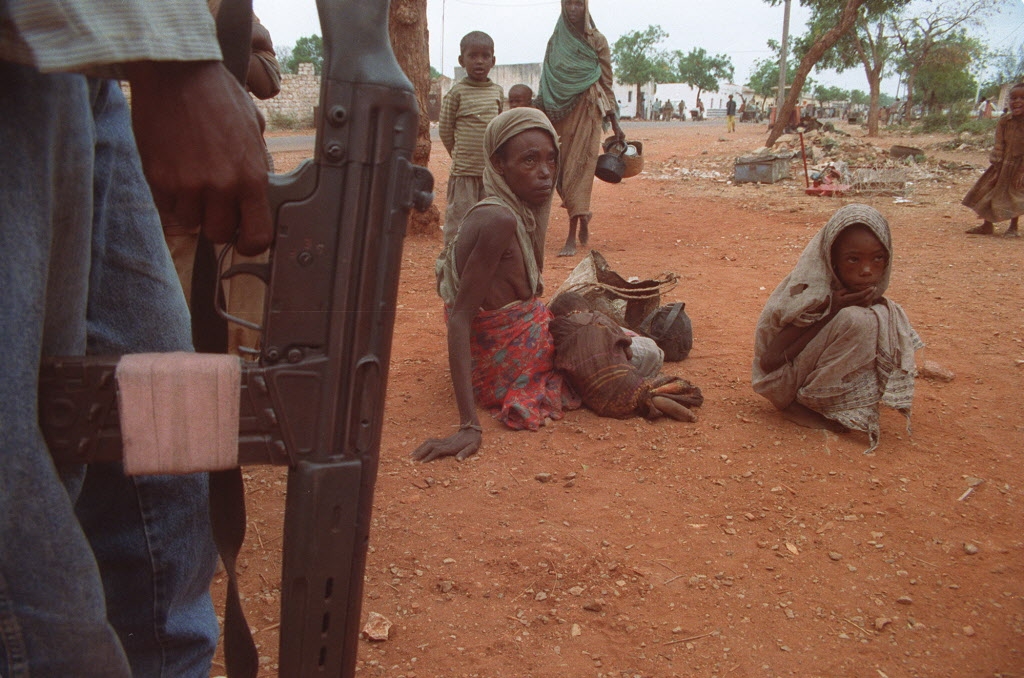
January 1992 brought Mogadishu. Eighteen months before the “Black Hawk Down” incident that incensed Americans. Mogadishu was a lawless, crumbling city where men (and boys) with guns, chewed drugs and stole food from the unarmed masses. Schenk and his boss were drawn back many times over eight months by the suffering.

Schenk started out on a city daily in Pasadena, California in 1972 and finally walked away from deadline pressures and the intense daily grind of a police and crime reporter in 1981. He evolved from a “pretty much squeaky clean sort of guy into something of a gonzo journo” fueling his trade with “lots of alcohol and drugs.”

Schenk developed an expertise in outlaw motorcycle gangs and “their migration into organized crime in the 1970s.” He co-authored an investigative piece called Born to Raise Hell Inc. for MacLean’s Canada’s weekly news magazine in 1977.

“By 1981 I was looking to get off the adrenalin treadmill,” Schenk said.

Schenk left the Toronto Sun that year, burned out and looking for “something more meaningful,” he recalls. Maybe he’d hitch hike around the world. “I thought I was going to have to walk away from journalism completely.” Instead, he re-purposed his journalism skills. “Turns out it was as much my lifestyle as much as my trade.”

Then he heard World Vision Canada was looking for a freelancer to go to Ethiopia. It was 1985 and that country was in the grip of The Great Famine.

Schenk worked with World Vision for nine years all over Africa producing stories and still photos of World Vision development work and responding to fast-breaking natural disasters and armed conflicts in Angola, Rwanda, Somalia and southern Sudan, taking assignments in Lebanon and Romania. He videotaped gruesome images of the Rwandan genocide up close.

So, how to re-purpose one’s life?  John Schenk says, “Don’t presume media or public relations are the only tracks. Don’t underestimate the value brought to any organization by someone used to marching off the map,” he says. John especially recommends looking at humanitarian organizations.

“A hard core journalist is an improviser, sees problems, challenges. They cut through systems and protocols and find solutions. And lives get saved.”

“It’s a place where a journalist can be a pioneer.”

He recalls 2005 in the mountains of Pakistan when World Vision responded to a 7.6 magnitude quake that killed 76,000. A colleague, another former journo turned to him and said: “These mountains, we’ve got to get up there and see what’s going on.”

Schenk had been thinking the same. He replied: “Yup, but we can’t go empty-handed.” John writes, “A few days later we were marching up steep slopes with men from a devastated village, carrying 900 blankets on their backs.

We returned to camp and spent half the night writing our stories, sending our photos to World Vision HQ by satellite modem and describing our day in interviews to major media outlets from nearly every time zone on the planet.”

John Schenk has indeed been brought through some of the most dangerous places on earth. God has held up his end of the “bargain”.

And telling the stories he found there is where John Schenk has found his purpose and an answer to a prayer.

—————————————————————————————————

Editor’s note: John Schenk works with World Vision Global Communications. He will be in Tacoma, Washington Wednesday night, February 22nd as part of a panel to discuss the Pacific Lutheran University Media Lab’s documentary “Over Exposed: The Cost of Compassion”.  Schenk is among those featured in the award-winning documentary. The film will be shown at 7pm at Lagerquist Hall in the Mary Baker Russel Building on the PLU campus. Admission is free.

John Schenk helped edit portions of this copy. Some habits die hard.

———————————————–  ———————————– ————

Five mornings a week for the last seven years, while you were sleeping – Lily Jang has gotten up to go to work. Her alarm clock is set for 3:45 am. “I never hit the snooze button,” says Jang. “I get paid to be myself.” Lily Jang has worked in Seattle TV news for 11 years, for the last seven as the lead morning anchor for the Q13 Morning News

http://www.q13fox.com/news/mornings/
Still, in six weeks all that will change. Because Lily Jang is leaving Seattle to go back home to Texas. Her new purpose? Connecting with family and starting a new job as morning anchor for KHOU-TV (CBS) in Houston. She was born in Vietnam. Her parents, Vivian and David Jang are Chinese. She is fluent in Cantonese and Vietnamese. Jang says her main purpose is to be with her father who’s suffering from Parkinson’s Disease.
“Everything I ever did was because of my parents,” Jang says.

Right now she just wants to tell stories, mainly those she considers “American Dream” profiles. Her inspiration comes from her mother and father. Vivian Jang got out of Vietnam with Lily and her brother in the spring of 1975 when Saigon fell to Communist forces. Because of bureaucratic red tape her dad had to wait three years to get out of the country.

Her mom worked as a secretary. “All they ever did was support me.” Eventually the couple opened a Chinese restaurant and grew the business. “Everything they ever did was because of me and my brother.
But today, with her father suffering from Parkinson’s disease, Jang feels it’s time to go home. “If not now – when?” she asks. On a recent trip back to Texas Lily noticed her dad’s shaking (a tell-tale sign of Parkinson’s) had gotten noticeably worse. But Lily says being at her father’s side seems to break the side effects of Parkinson’s – for now. Jang says being back home will make her father happy. Her parents still live in the Houston house in which Lily grew up.
Jang graduated from the University of Texas http://www.utexas.edu/ with a degree in broadcast journalism. One person who always believed in her was her mentor, James Lynch, Q13 News reporter. Lynch was an anchor in Austin, Texas when Jang was just getting into the business. As a young reporter she bugged him for advice. Lynch used to implore Lily to “give it your 150 (percent).” He was among those giving the young journalist encouragement but Jang’s always had enough confidence. “I got into the business with the attitude that I could do better than that girl.”

“And being nosey helps.”

Lily Jang is a journalist who embraces social media with both arms. She has 19,000 Twitter followers and 6,200 Facebook friends. When she first mentioned her plan to leave Seattle TV news a few weeks ago, she got 580 comments on her Facebook page http://www.facebook.com/iamlilyjang?ref=ts . She read every one. They were overwhelmingly supportive. But as much as she uses social media, Lily describes herself as a private person. And she marvels at the idea that what she’s doing is some grand gesture. “I don’t think it’s such a big deal. I’m not obliged to do this, it’s an honor. My parents did everything so my brother and I could live the American Dream.”

“And when you make a decision from the heart you never regret it.”

Lily Jang’s last day anchoring the Q13 Morning News is Friday, February 10th, 2012. That’ll be her last day of “sleeping in”. Three days later she begins her new morning job at KHOU-TV.  Then she’ll be setting her alarm for 2:30am.

http://www.q13fox.com/about/station/newsteam/jang/