Archive for the ‘employment’ Category

Traveling Fast and Light

“There’s a connection with the truth that journalists have. When people become journalists they have a purpose.” – Lee Schneider

Today Lee Schneider produces documentaries, writes a blog for Huffington Post and does online strategies for businesses with a socially responsible mission. His production company http://www.docucinema.com/about/ creates “cause-driven” nonfiction films. At 55, Schneider has found his purpose on the digital media frontier.

But it didn’t come without a lot of searching.

“When I worked at NBC I was working for GE. That’s what I stood for. When you work for Nat Geo, (owned by Fox) you stand for Rupert Murdoch.” Schneider, a veteran of NBC Dateline, Fox and ABC’s “Good Morning America” is now directing Shelter http://docucinema.com/shelter/, a documentary focusing on architects and how good design helps the homeless and victims of disasters. His documentaries have aired on History Channel, Discovery Health Channel, The Learning Channel, Bravo, Food Network, Court TV, ReelzChannel and A&E http://www.linkedin.com/in/leejschneider.

Schneider’s been blogging since 2009. He started by writing a blog called, “500 Words on Thursday”. “I did about one hundred of them. Now I help get clients’ blogs off the ground.” Currently he averages 2-3 blogs a week. He blogs  once a week for the Huffington Post. “The voice you’re putting out there better be good. He reads Maureen Dowd, Kristof and David Carr of the New York Times. He also follows Mark Horvath’s “Hardly Normal” http://hardlynormal.com/blog/, another repurposed journalist who’s using new media and “tapped into a tribe.”

How does the journalist repurpose himself on the frontier of digital media? “There’s a connection with the truth that journalists have,” says Schneider. When people become journalists they have a purpose. He says he’s grateful for how the newsroom work ethic prepared him to work hard today.

Schneider began to grow weary of network news in the mid-90’s. “Why do I want to keep doing this?” he kept asking himself as he turned out investigative pieces often involving murder, rape and other forms of violence. “I produced stories I couldn’t show my kids.” But it was the reach of network broadcast news that was enticing. “I’d be done after a long day and the phone would ring and they’d ask, Can you do re-cut for Nightly?” Still, he left NBC Dateline in 1996. “It took a while but I’m out of TV. The problem wasn’t me – it was television.” But it took an adjustment.  Something happens when we work for big TV networks. There’s a sense of entitlement. And when that goes away we ask, what happened? “The technology we’re using now – WordPress is not a helicopter. And it’s not Dateline but it’s a good reach.”

Schneider’s tips to journalists searching for new purpose, or bloggers looking for tips to attract more views? “Well, that’s one way to do it, list tips” or top ten lists or “how to’s.” All journalists have skills,” Lee says. “We all know how to interview. We all know how to find people who know how to tell their story, people who can drive the narrative.” But “deciding and curating content is the issue.” Curating should be at the top of the list for any journalist trying to make sense of the digital world.

Nobody else is going to do this for you.”

When Schneider went to Haiti in August of this year to document earthquake devastation, it was just Schneider and a local videographer. Two people, two backpacks.

They arrived at the scene to start unpacking what little gear they had and someone asked Lee, “Where’s the crew?” But that was it – two people. Now with no TV news network to pick up the tab and call the shots, he’s writing up fundraising proposals to go back to Haiti. Unfinished work for the journalist who has found his purpose, travelling light and fast.

Schneider is a New York native, living in Santa Monica, California with his wife, Tabby Biddle who also blogs for Huffington Post http://www.huffingtonpost.com/tabby-biddle

Lost in the woods

Posted: November 15, 2011 in employment

I had just turned fifty years old and I was lost in the woods.

It was April 8th, 2005 I had just spent my first full day I spent on the job at World Vision US Headquarters in Federal Way, Washington. . I never felt so ill-prepared for a new job in my life. I attended four meetings and went home at 5pm without a story to write. I didn’t feel like I was earning a paycheck. I didn’t feel like I had direction. I had a nice office cube in which to work but  I felt I had lost my purpose.

I had no idea how far I would have to go to find it again.

Within the next 24 months I would travel to the Gulf Coast following stories of how help was getting to Katrina survivors, then I was off to the hills of Pakistan to chronicle the story of how aid was getting to hundreds of thousands of quake survivors.

That’s me with my camera, showing the kids in a village called Balakot what the devastation looked like through a black and white view finder.  They showed me a lot about endurance and grace. Bringing back images of this destruction helped raise money to help kids like these.

In 2007, there were two trips to sub-Saharan Africa as I helped develop the story of Austin Gutwein, an Arizona teen who was raising money to build a school for AIDS orphans in southern Zambia. Austin showed me a lot about what one kid can do.  Once I heard about Austin’s story, I shared it with John Larson, a good friend of mine who was working at NBC News at the time.

With the help of the exposure Austin’s story got on NBC, Hoops of Hope was able to raise enough money to build a high school in an AIDS-ravaged region of southern Zambia. Since his story aired on a couple of networks (NBC and CBS) Hoops of Hope has been able to raise more than $2 million. Austin’s charity has helped build teachers’ quarters for that high school and a medical clinic. And he’s not done yet.

Getting to know kids like Austin has been an honor. Seeing how my talents as a journalist have been repurposed – has been nothing short of amazing. Because now when a story gets aired – lives can be saved.

It’s been a short, steep hike in the woods, learning how to pitch a story to media rather than write it on a deadline. But I still need to know what a story is. I try not to forget the journalist I was – the journalist I like to think I still am.

The repurposed journalist.

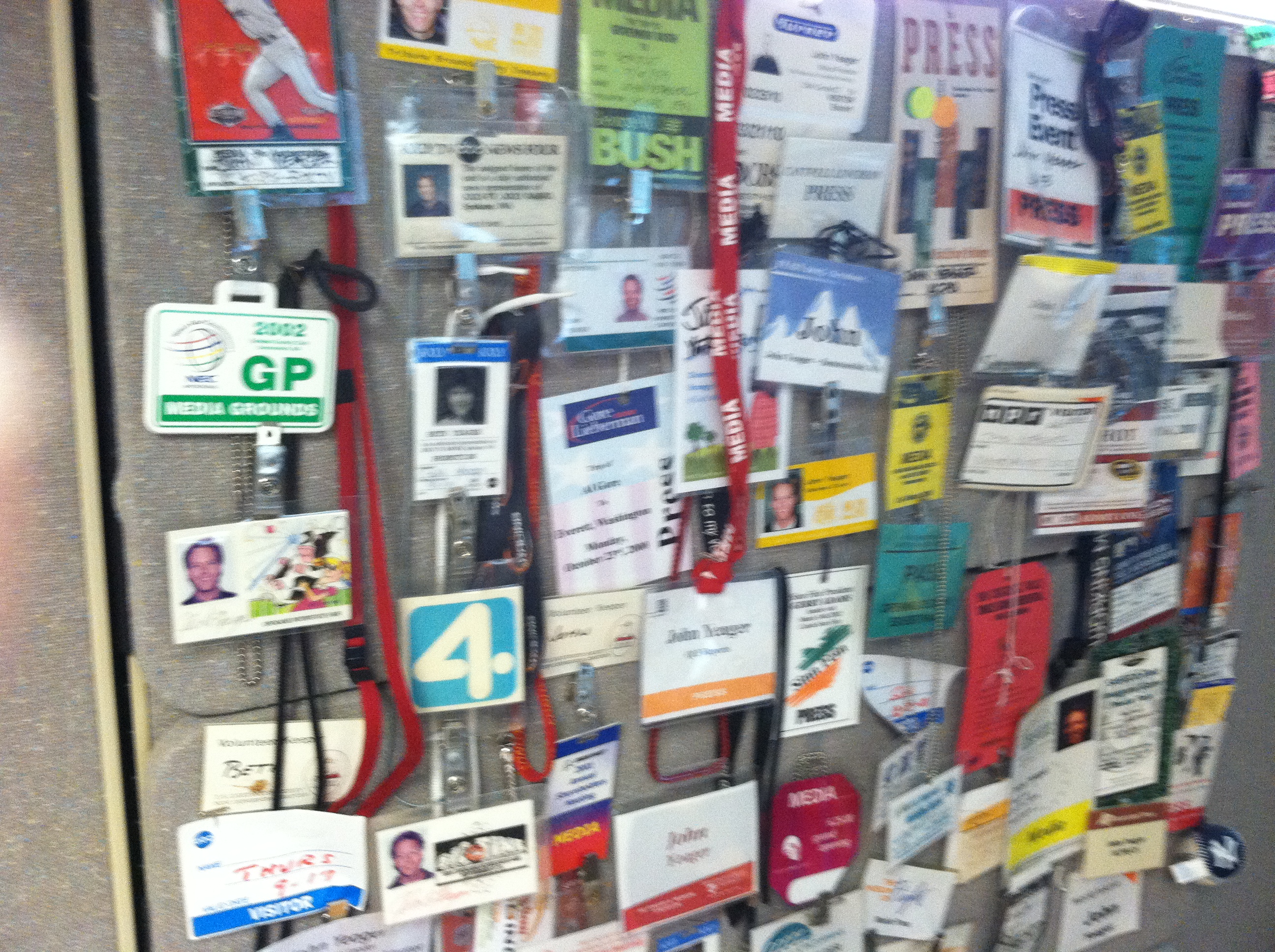
Now six years later, I’m the one with an office wall full of press passes who hasn’t forgotten where he came from.  And I’m also the one who doesn’t feel so lost in the woods anymore.

Stay tuned.


Welcome to the journey.

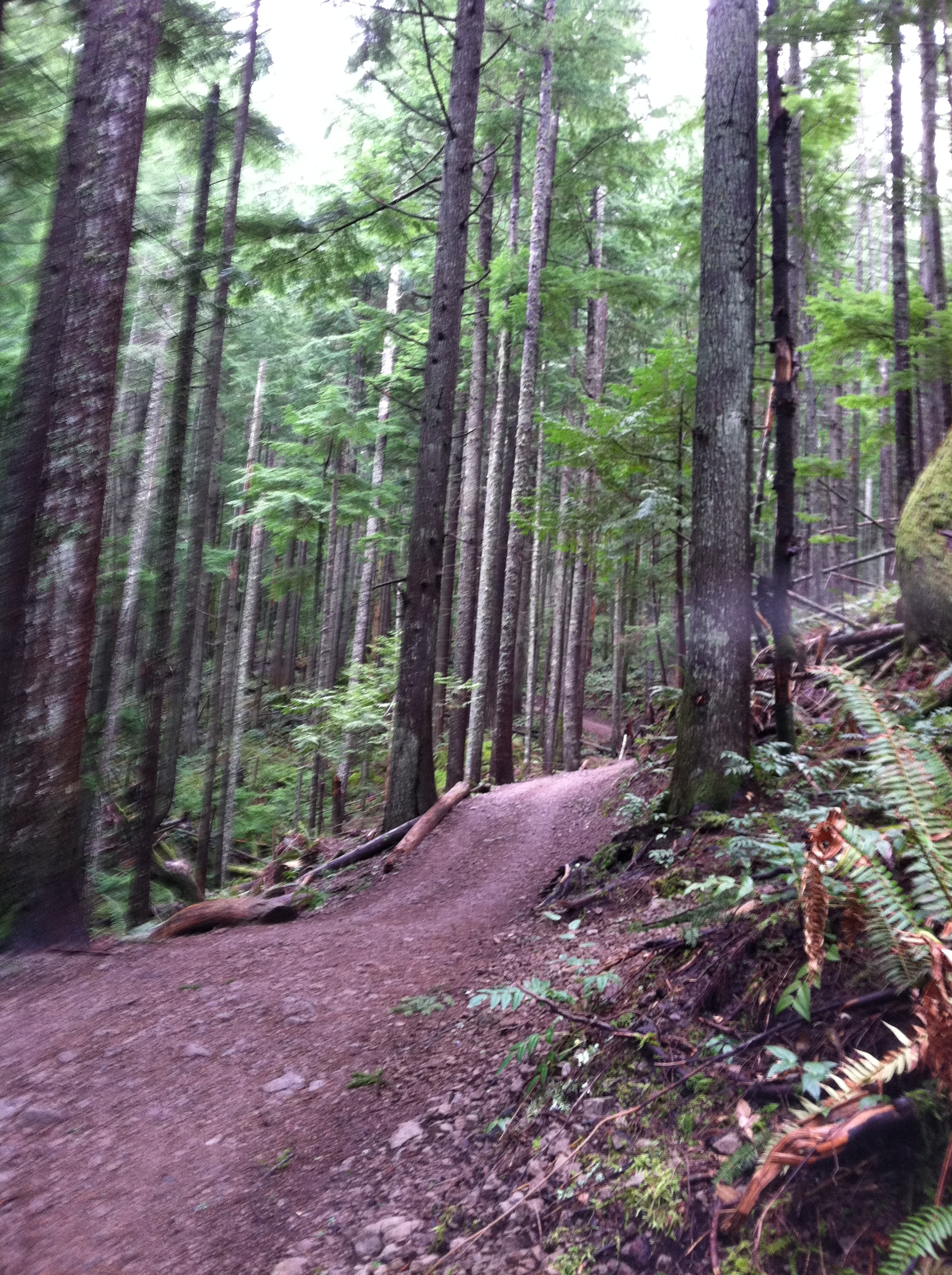
Where are you headed on this steep, short hike of life? As we pause here in this forest of thought we should savor the company of trees.

Here’s the original idea behind the repurposed journalist blog:
Seattle TV news journalist savors the art of storytelling. In it he finds his purpose. But deadline after deadline he grows increasingly weary of local TV news. With every pre-dawn hard news live shot he feels significance draining from his career. Finally at 50, he’s had enough. He quits. He accepts a job at an international charity, developing stories about those living in extreme poverty, especially children. His job is now to share those stories with local, regional and national journalists he once worked with. He begins to find significance in Life after the Newsroom. An interest in digital media begins to grow. He’s on a journey of self discovery across a new and unfamiliar landscape. And it feel like the trail is still pretty steep.

<a

I wanted to be a reporter since my eighth grade teacher told me I should write. As a kid growing up in the Midwest, I watched Charles Kuralt’s “On the Road” reports on CBS News and knew that’s what I wanted to do one day. But I’ve written thousands of stories in the 25 years I worked as a TV news reporter in the Midwest and here the Pacific Northwest. I’ve won dozens of national, regional and local awards for journalism excellence. I’m proud of the body of work I’ve left behind but I’ve written plenty of forgettable fast food stinkers. McDonald’s serves food designed to fill you up and get you on your way. But hamburger is not a prime cut. On occasion I’d be able to win the fight with the desk or the producer and get enough time to sink my teeth into the juicy red meat of a real story, one with passion and character. But more and more I was finding that I couldn’t tell stories the way they deserved to be told. There wasn’t time. I liked the taste of sirloin and all they seemed to be serving me was ground beef.

At times in my career I got the opportunity to tell stories. In Spokane and later in Seattle, my “Positively Northwest” features won plenty of Emmy Awards. But soon, long-form features became a luxury that local stations couldn’t afford to produce. They aired three times a week. Eventually, stations were demanding a story every day. And soon they didn’t want feature stories. They wanted “hard news.” Once a consultant came to the station I was working at and told me, “features are the F-word.” News directors would talk about “story count” as if more forgettable stories were better than just a few. Pacing was everything. But as the pace went up and the quality seemed to go down, it began to dawn on me that I wasn’t having fun and more importantly, I wasn’t making a difference.

Every time there was an earthquake, flood or famine I’d find myself making the 30 mile drive down I-5 to Federal Way’s World Vision, an international non-profit, looking for an interview. World Vision responds to disasters all over the world, providing life-saving assistance. World Vision is a source of hope for 100 million people living in extreme poverty all around the world. It was a local-based charity with international reach. Little did I know that as I approached my 50th birthday, this charity would become a source of something just as powerful – for me. The steep trail through the forest was about to hit a fork. My hike was about to get interesting.

Do You Speak the Geek?

Posted: October 16, 2011 in employment

Geek or nerd?

To most of us, the terms geek and nerd are interchangeable. All I remember about geeks in high school was that they were nerdy and way uncool. And “cool” in high school was not a commodity that you could buy or trade. You either had it or you wanted it. And if you lost it – it was virtually impossible to get it back. Merely associating with a geek, unless he was helping you with a final exam (and even then it was still dangerous) required explanation to your friends. People talk in high school. Are you kidding? I had a modest reputation to uphold so I kept a safe distance from geeks. And if you’re being honest with yourself as you read this, you probably kept yours as well.

We thought geeks were weak. They couldn’t defend themselves. Their only “crime”? They excelled in math and science. Of course they made an easy target. Back in the day, geeks wore nerdy broken glasses taped up at the nose bridge, kept a pocket protector,  knew how to use a slide rule and probably subscribed to Popular Mechanics when they weren’t watching Star Trek re-runs. And because they were picked on by the cool kids – geeks kept to themselves and spoke their own language.

Well it’s time to go 12-step with my sins against the geeks. It’s time to ask forgiveness and repent. I’m a former TV reporter now working for an international relief and development organization. It’s a rewarding and demanding job. But because I work in the fast-moving, tech-crazy communications field I’m now required to be multi-lingual. In other words I need to speak the Geek on the job.

And it’s become essential in life. Whether it’s navigating through the dozens of apps on my i-phone, texting reporters story ideas, programming English football on my DVR or coordinating on-line banking through my home computer … it’s remarkable how nimble I need to be with technology in all facets of life. No matter where you go – tech is ubiquitous – like rain in Seattle or Big Hair in Dallas.

Of course Bill Gates, Paul Allen, Steve Jobs and Mark Zuckerberg have changed the perception of what it is to be a geek. We all remember “The Social Network” , the Oscar-nominated movie about Zuckerberg’s nerdy rise to power. Being uber-rich can change a lot of perceptions. But it goes beyond that. Big box electronics retailers like Best Buy provide a mobile tech help service called “Geek Squad” helping millions of consumers each year. Someone from that store will help come to your house, de-bug your computer or set up your modem for a price.

Of course if you think you’re up to the task of trying to install that Actiontec – M1000 DSL modem all by yourself, you’ll probably still need at some point in the installation process – to call tech support. And guess what?  That’s when you’ll wish you’d gone easier on that nerdy geek in Mr Roberts’ 5th period Science class. That’s when you’ll regret being so hard on geeks. By the way – the Indian kid on the phone from tech support is a geek too. And even though he’s half a world away, he’s laughing at how uncool you are.